
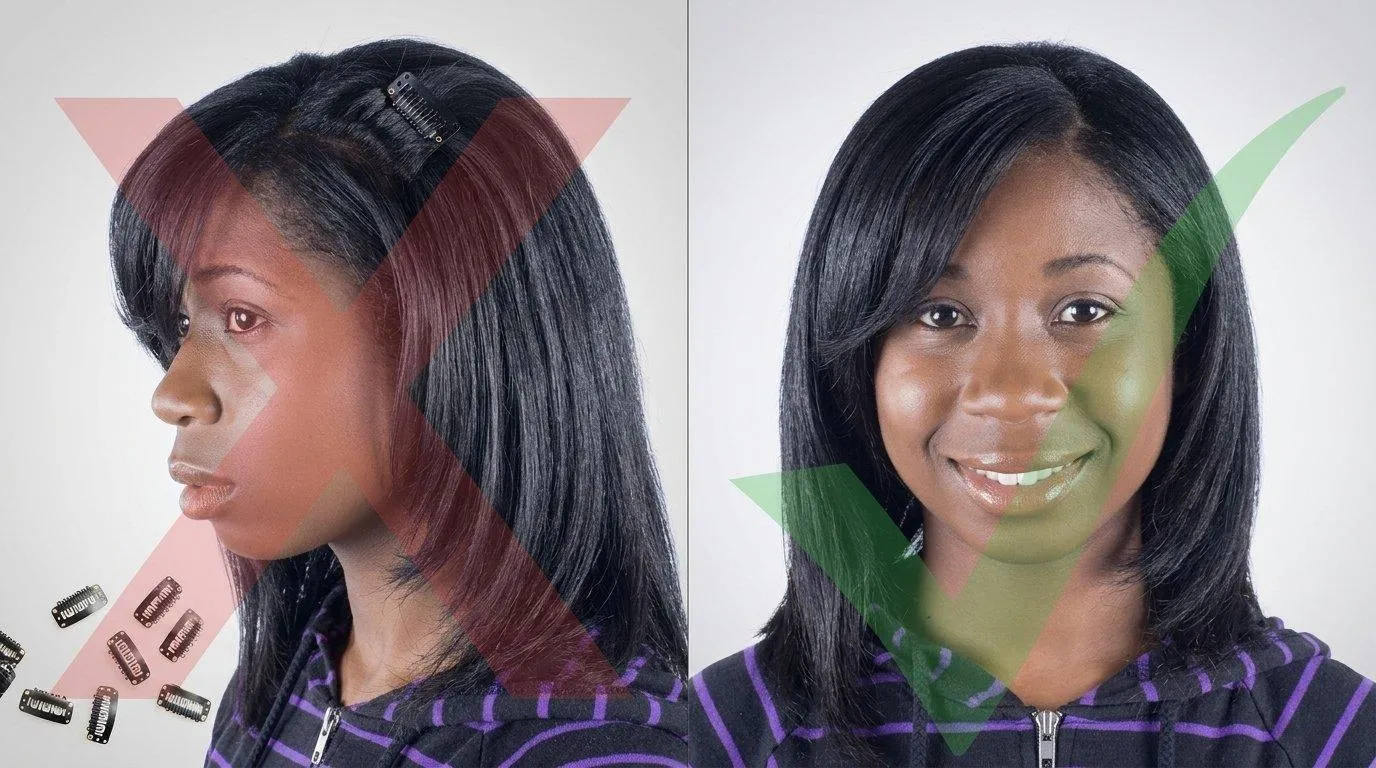
You’ve found a gorgeous set of natural hair clip-in extensions, spent time installing them, and checked the mirror, only to realize something doesn’t look quite right. Perhaps your curls aren’t blending, the extensions appear too bulky, or a few clips are peeking through your hair. It’s frustrating, especially when you’re hoping for an effortless hairstyle that looks like your own. The good news? Even premium human hair extensions can look unnatural when the texture, placement, or styling technique isn’t right. Fortunately, most of these issues have simple solutions. Whether you’re wearing your natural curls, experimenting with a twist-out, or transitioning between hairstyles, understanding these seven common mistakes can help you achieve a more seamless finish without unnecessary heat, excessive tension, or repeated salon appointments.
Mistakes 1 and 2: Choosing the Wrong Texture and Exposing Your Clip-Ins
1. Choosing clip-ins that don’t match your natural hair texture. Natural Black hair comes in an incredible variety of textures, from loose 3B ringlets to tightly coiled 4C strands. One of the biggest mistakes is purchasing extensions simply because the curls look beautiful in a product photograph. When shopping for the Best Natural Hair Clip Ins For Black Hair, the priority should be finding a texture that complements how your own hair naturally looks or how you plan to style it. A glossy, loosely curled extension may look noticeably different beside dense, softly textured coils, even when both are described as curly hair.
Hair texture involves more than curl classification. Shrinkage, strand thickness, density, and natural sheen all influence whether extensions blend convincingly. For example, someone with 4B or 4C hair may prefer a coily extension for a wash-and-go look, while a kinky straight texture could work better for a stretched blowout. Before committing to a full set, compare a small section of the extension with your own hair in natural daylight. Look at the curl size, volume, and finish rather than relying exclusively on texture labels. If your hair changes appearance after a twist-out or braid-out, compare the extensions with that finished style instead.
2. Installing clip-ins too close to your hairline or parting. Even perfectly matched hair can look artificial when the clips or wefts are visible. Installing extensions too close to your temples, crown, or natural parting leaves little room for your hair to conceal the attachments. This becomes particularly noticeable when you move your head, tuck your hair behind your ears, or take photographs from different angles.
To correct this, begin by creating neat horizontal sections, starting around the lower back of your head. Attach each weft securely without pulling tightly against your scalp, and leave enough natural hair above it to provide coverage. Smaller extension pieces may work better around the sides, where the hairline is more exposed. If you have thinner areas, avoid attaching heavy wefts directly to those sections. After installation, use a handheld mirror alongside your bathroom mirror, or take a photograph of the back of your head. A quick check can reveal exposed tracks that are difficult to notice from the front.
Mistakes 3 and 4: Adding Too Much Volume and Choosing the Wrong Length
3. Using too many clip-ins and creating unnatural volume. Natural textured hair is beautifully versatile, but adding excessive extension hair can create an unbalanced silhouette. If your extensions are dramatically fuller at the ends than near your roots, or your crown looks unusually bulky, you may be using more wefts than your hairstyle requires. The goal is to complement your existing volume, not overwhelm it.
For women who love wearing their natural curls, Curly Clip Ins For Black Hair can be especially useful for adding fullness while preserving a textured finish. However, placement matters just as much as the amount of hair. Try installing half of your planned wefts first, then assess your hairstyle from the sides and back. Add additional pieces only where you notice gaps or want extra fullness. Distributing smaller wefts strategically often produces a more believable result than concentrating several heavy pieces in one area. Your scalp should also feel comfortable, without pulling or pressure.
4. Ignoring the difference between your natural hair length and the extensions. Another common problem occurs when short natural hair sits visibly above much longer extensions. This can create a distinct separation between the two lengths, particularly when the natural ends are blunt or the shorter crown sections don’t blend with the added hair.
If you’re working with short 4C hair or a growing-out haircut, consider choosing a moderate extension length rather than immediately reaching for extra-long pieces. Twist-outs and braid-outs can help create a consistent texture across the shorter and longer sections. You can also try a half-up, half-down hairstyle to conceal some of the shorter layers. For a more permanent solution, a professional stylist can shape or layer the extensions to soften an obvious length difference. Avoid cutting your natural hair merely to accommodate the extensions. A convincing blend should work with your existing hairstyle.
Mistakes 5, 6 and 7: Skipping the Blend, Overlooking Color and Neglecting Maintenance
5. Failing to blend your natural hair after installation. Clipping the extensions into place isn’t necessarily the final styling step. Sometimes natural hair and extensions have similar curl patterns but different levels of definition, moisture, or shrinkage. The result can look like two separate hairstyles sitting on the same head. This is especially noticeable when your natural roots are fluffy while the extensions have tightly defined, shiny curls.
Learning how to blend clip-ins with natural hair often comes down to creating a consistent finish. For compatible curly textures, lightly refresh the extension hair using water and a suitable leave-in or curl product, following the manufacturer’s care instructions. A twist-out or braid-out can help your natural hair and extensions form a complementary pattern without straightening. Once everything is dry, gently separate selected curls for balanced volume. Always test unfamiliar products on a small extension section first, and avoid using excessive heat simply to force two different textures to match.
6. Choosing the wrong hair color or shine level. Two textures can blend beautifully and still look disconnected when their colors differ. Natural black hair isn’t always a single uniform shade. Some strands have warm brown undertones, while others appear cooler or darker. Extensions labeled Natural Black or 1B can also vary between manufacturers. Those differences may be barely noticeable indoors but become obvious in daylight.
Before purchasing, compare your hair and the extensions near a window or outdoors in indirect natural light. Pay attention to undertones, existing highlights, and shine. If your natural hair has a soft matte finish, unusually glossy extensions may need more careful styling to achieve a consistent appearance. Lightweight products can help manage the finish, but too much oil may exaggerate the difference. If coloring is necessary, consult a professional familiar with human hair extensions, particularly when the hair has already been processed or dyed.
7. Neglecting maintenance and wearing clip-ins beyond their best condition. Even natural-looking hair extensions can lose their appeal when they become tangled, dry, or coated with styling products. Worn ends, matted curls, and inconsistent definition make the added hair stand out from your freshly styled natural strands. Poorly maintained clips can also become uncomfortable or less secure.
Build a simple after-wear routine. Remove each piece gently, check for tangles, and detangle using a method suitable for its texture. Wash and condition human hair extensions according to the manufacturer’s instructions and the amount of product buildup. Allow them to dry thoroughly before storing them neatly in a clean, dry place. Temporary clip-ins should generally be removed before sleeping, helping prevent tangling and unnecessary pulling on your natural hair. Consistent care is one of the easiest ways to keep your extensions looking fresh between installations.
A 10-Minute Blending Check and Your Natural Hair Clip-In Questions Answered
Already installed your extensions and need to leave home soon? You don’t necessarily need to start over. A quick ten-minute touch-up can improve an existing hairstyle, although a full installation or major texture correction may take longer. Start by checking the crown, sides, and back for exposed clips. Redistribute any bulky sections, gently adjust curls that look noticeably different, and confirm that the hair color appears consistent in daylight. Finish by checking that the attachments feel secure without pulling. Small adjustments can make a significant difference before work, brunch, or an evening out.
When shopping for clip-in hair extensions for Black women, consider your natural texture, desired length, density, color, and styling routine together. Check the quality of the hair, the construction of the clips, and the maintenance required. Human hair extensions may offer greater styling flexibility, but that doesn’t mean every texture responds equally to heat or coloring. The most suitable choice is the one that complements your hair, feels comfortable, and fits realistically into your everyday routine.
How do I make clip-in extensions look natural on 4C hair? Choose a coily or appropriately textured extension with similar density and shrinkage. Leave enough natural hair to conceal the wefts and use compatible styling methods to create a consistent finish. For very short 4C hair, careful placement and moderate lengths may help improve coverage.
Can I blend clip-in extensions without straightening my natural hair? Absolutely. Twist-outs, braid-outs, and texture-matched curly or coily extensions can help create a cohesive hairstyle without direct heat. Allow styled hair to dry completely before separating curls or making final adjustments.
Why are my clip-in extensions showing through my natural hair? Visible attachments usually result from placing wefts too close to the surface, using bulky pieces, or leaving insufficient hair to cover them. Try repositioning the extensions lower or using smaller pieces where coverage is limited.
Can wearing clip-ins damage natural hair? They can contribute to breakage when repeatedly attached to fragile sections, installed too tightly, or removed carelessly. Avoid excessive tension, rotate attachment areas where appropriate, and stop using clips that cause pain or scalp irritation.
How often should I wash natural hair clip-in extensions? There isn’t one washing schedule that works for everyone. Cleaning frequency depends on how often you wear them, the amount of product buildup, and the hair manufacturer’s recommendations. Wash when necessary rather than automatically after every use.
Ultimately, natural-looking clip-ins aren’t simply about investing in expensive extensions. They’re about understanding your hair and making thoughtful choices that complement its texture, length, and personality. By correcting these seven common mistakes, you can create versatile styles that look more cohesive while minimizing unnecessary manipulation of your natural strands. Whether you prefer defined curls, a fluffy twist-out, or a stretched textured look, the best result is one that feels comfortable, suits your lifestyle, and lets you enjoy your hair with confidence.
