
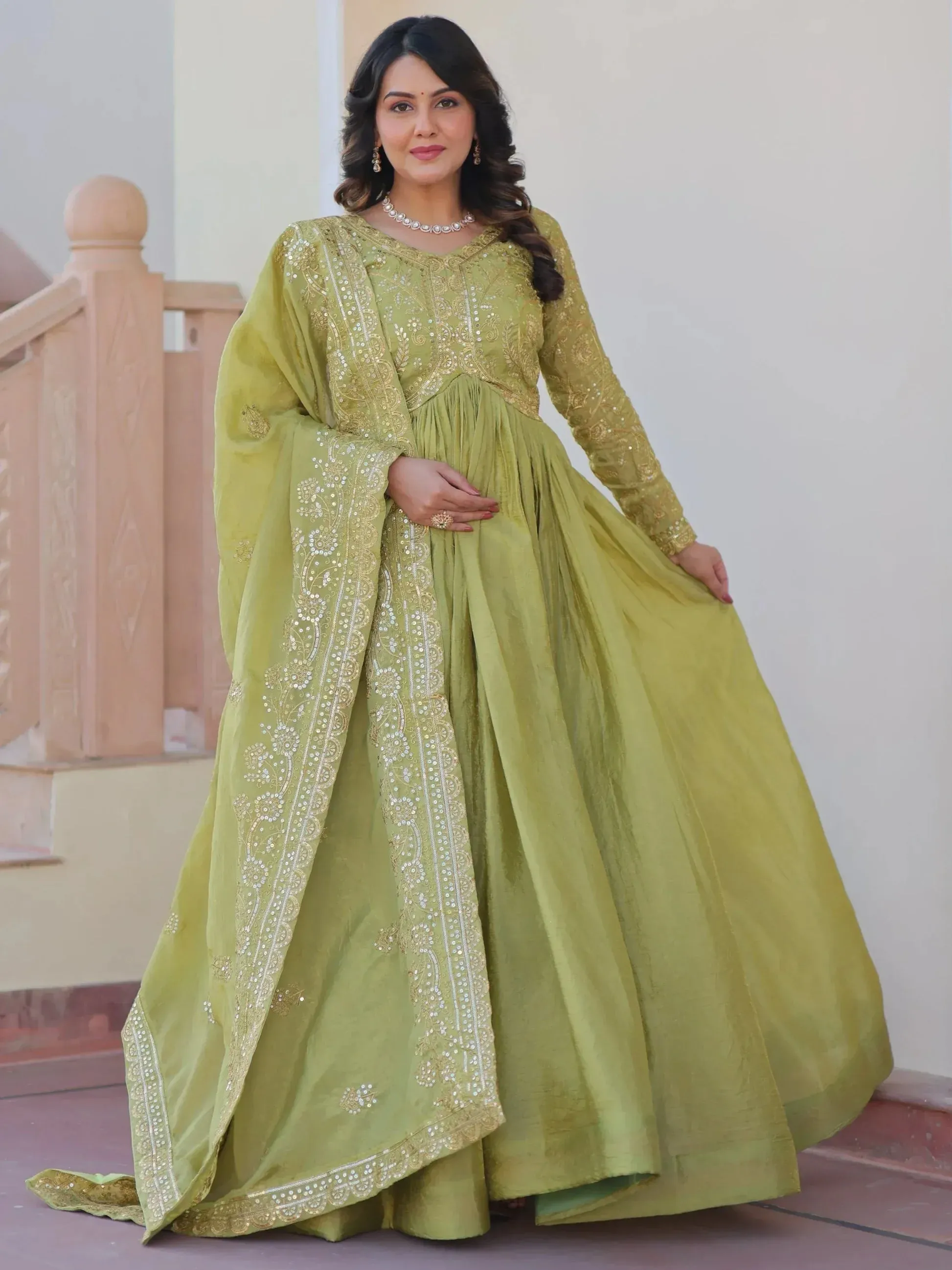
You’ve chosen your earrings and booked a turn with the henna artist. Now picture the moment she finishes your second hand, and your dupatta starts slipping. That small inconvenience is worth thinking about while you still have a choice of outfits. A sleeveless gown for women who want henna up to their elbows has an obvious advantage, but a lehenga with a well-fitting blouse can work just as well. The decision depends on where you’ll sit, what you’ll do and how each outfit fits.
Start With the Seating Arrangement
Ask the host where the artist will be working. Low cushions in a courtyard call for enough room to bend your knees and a skirt you can gather beside you. At a table, a trailing cuff is more likely to get in the way than a full skirt. If you’ll be greeting relatives at the entrance before your appointment, think about the walk between the two spots. A hem that clears the steps leaves you free to offer someone an arm.
When a Gown Works Well
A gown earns its place at a busy family function when you can zip it up and give your attention to everyone else. Look at the seam where the bodice meets the skirt. If it pulls upwards when you reach across a table, try a different cut before committing to alterations. A cream floral Anarkali gown is one option for a daytime gathering. The print carries much of the detail, so a pair of coloured earrings may be all you want to add.
The Case for Lehenga Separates
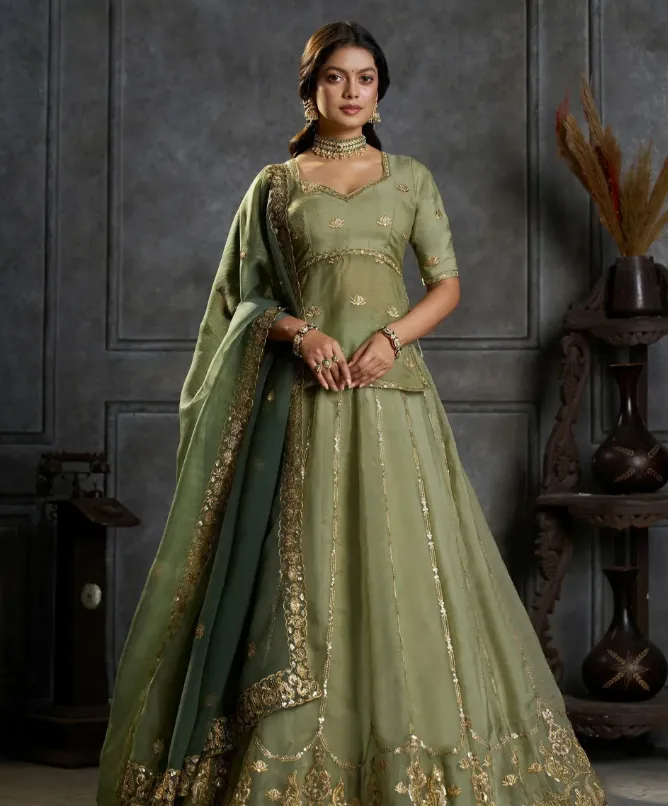
A search for a mehendi function dress for women often turns up lehengas alongside gowns. That’s welcome news if a dress that fits your shoulders usually feels snug at the hips. With separates, you can compare the blouse and skirt measurements individually and ask about adjusting just the piece that needs it. There’s room to play with layers, too. Take a mauve floral crop top and skirt with a matching jacket. You can leave the jacket on your chair during your appointment.
Leave Room for the Henna
The part of a sleeve that matters most is where it lands when you bend your arm. A loose bell sleeve may look short enough while you’re standing, then fall straight across your wrist when you sit down. Try resting both forearms on a cushion, palms up, as you would for the artist. If the cuffs stay clear without anyone holding them, you’ve found a workable length. Put your bangles on beforehand to see whether they slide into the same space.
Before You Confirm the Order
An online listing can show a beautifully finished outfit even when the option in your basket needs stitching. Read the description for the exact size or variant you intend to buy. For a gown, compare the stated length with a dress you already wear with flats. For a lehenga, check whether the blouse arrives finished or as fabric your tailor will need. These five checks can help you judge whether the outfit will be ready in time for the celebration.
- Choose fastenings you can reach.
- Check hem length with your shoes.
- Preserve embroidered borders when shortening hems.
- Confirm whether the blouse comes stitched.
- Book alterations before the event.
Once Your Hands Are Decorated
Think through the half hour after your appointment while you’re getting dressed. If you want a picture of the finished design, hand your phone to a cousin before you take your seat. Wear your hair the way you want it in the photograph, especially if you usually tuck loose strands behind your ears. A small bag with a shoulder strap can hang on the back of your chair. You’ll appreciate having both wrists free when the artist asks you to turn them over.
Conclusion
Keep the gown on your shortlist if you like the way it falls when you sit and would happily wear it again to dinner. Choose the lehenga if you already own a blouse or skirt you’re eager to pair with it for another celebration. For the final fitting, wear your chosen shoes and sit as you would at the ceremony. If you can stand up again without tugging at a cuff or gathering the hem, you’re ready for your turn.
